.png)
Employee surveys are one of the most powerful tools HR teams have — but only if they ask the right questions. A poorly written question can lead to vague, polite, or unusable feedback. A great question, though, gets people to open up, share real experiences, and tell you exactly what you need to know to make work better.
Most of the time, the difference comes down to how you ask. With advancements in AI and continuous listening platforms like Hoogly, even the way we approach survey design is changing. We can now move from guessing what to ask to letting intelligent systems identify and even ask the right questions automatically.
But before AI can improve your surveys, you have to master the basics of writing them.
Why Good Survey Questions Matter
Every question in an employee survey is a signal. It tells your people what you care about, how much you listen, and whether you’ll act on what they say.
When questions are too broad (“Do you like your job?”) or too complex (“To what extent does leadership demonstrate proactive alignment with cross-functional goals?”), employees lose interest. The result? Shallow responses and lower participation rates.
The best survey questions are simple, focused, and emotionally intelligent. They spark reflection, not confusion. They give employees permission to be honest and give HR teams something they can actually use to make decisions.
Start With a Clear Goal
Before you write your first question, decide what you want to learn.
Do you want to measure engagement? Understand workload balance? Improve leadership communication? Each of these goals requires a different set of questions and a different tone.
A good rule of thumb:
-
If you want to measure, use rating or scale questions.
-
If you want to understand, use open-ended or follow-up prompts.
-
If you want to explore sentiment, mix both.
The goal defines the question, and the question defines the insight.
Write Like You Talk
Survey questions should sound like real people wrote them. Employees should read them and instantly understand what’s being asked without stopping to interpret corporate jargon.
Instead of:
- “To what degree does your team exhibit interdepartmental collaboration and alignment with business priorities?”
Try:
- “How well does your team work with other departments?”
Simple, conversational questions build trust. Employees are more likely to answer honestly when they don’t feel like they’re taking a test.
Avoid Bias and Leading Language
The best questions are neutral. They don’t assume anything, and they don’t push employees toward a certain answer.
Leading:
- “How satisfied are you with our amazing new leadership training?”
Neutral:
- “How effective do you find the recent leadership training?”
The first invites flattery. The second invites truth.
Your goal isn’t to hear what sounds good — it’s to learn what’s real.
Balance Scale and Open-Ended Questions
Closed questions (like rating scales) help you quantify feedback. Open-ended questions help you understand context. You need both.
-
Scaled question: “On a scale of 1–5, how clearly do you understand company priorities?”
-
Open-ended question: “What would help make company priorities clearer for you?”
Together, these questions show both the score and the story behind it.
Ask About Feelings, Not Just Facts
The heart of engagement isn’t logic — it’s emotion. People decide whether to stay, grow, and advocate for your company based on how they feel about their work.
That means your questions should go deeper than satisfaction or performance. Ask about pride, motivation, and connection.
For example:
-
“When was the last time you felt proud of something you did at work?”
-
“How supported do you feel when things get stressful?”
-
“What part of your job feels most meaningful to you?”
The more you understand the emotional drivers behind engagement, the better you can strengthen them.
Tailor Questions to Timing and Context
Good surveys meet employees where they are. If you’re running a quarterly engagement survey, ask broad cultural questions. If you’re gathering post-project feedback, focus on communication, workload, and teamwork.
Contextual questions show employees you’re listening to what’s happening now, not just checking a box.
For example, after a reorganization:
-
“Do you feel clear about your role and responsibilities after the recent changes?”
-
“What could make this transition smoother for your team?”
When employees see relevant, timely questions, participation jumps — because the survey feels like part of an ongoing dialogue.
20+ Employee Survey Questions That Actually Work
These examples can be mixed and matched across engagement, leadership, communication, growth, and culture surveys.
Engagement & Belonging
-
Do you feel proud to work at this company?
-
How likely are you to recommend this company as a great place to work?
-
Do you feel connected to our mission and values?
-
What motivates you most about your work?
-
Do you feel your role makes a difference in the company’s success?
**Leadership & Management
**6. Do you trust your manager to support your professional growth?
7. How clear are your manager’s expectations of you?
8. How comfortable do you feel giving feedback to your manager?
9. Does leadership communicate decisions transparently?
10. What’s one thing your manager could do to better support your work?
**Culture & Communication
**11. How well do teams across the company collaborate with each other?
12. Do you feel safe sharing honest feedback here?
13. How effectively do company-wide meetings share useful information?
14. Do you feel leadership listens to employee concerns?
15. What’s one thing that could make communication in the company better?
**Career Growth & Development
**16. Do you have opportunities to learn and grow in your role?
17. How supported do you feel in achieving your career goals?
18. What kind of training or skill development would help you most right now?
**Wellbeing & Workload
**19. Do you feel you have a healthy balance between work and personal life?
20. How manageable does your workload feel right now?
21. What could the company do to better support your wellbeing at work?
**Diversity, Inclusion & Recognition
**22. Do you feel respected and valued for who you are?
23. How inclusive do you feel our culture is for people of all backgrounds?
24. How often do you feel recognized for your work and contributions?
You don’t need all of these in one survey. Choose 10–15 based on your current priorities, and rotate questions regularly so employees don’t feel repetitive fatigue.
How AI Is Changing the Way We Write Survey Questions
Traditional surveys are static. They ask the same questions on the same schedule, regardless of what’s happening inside the company. AI changes that completely.
AI-powered tools like Hoogly can now detect sentiment trends in employee feedback and automatically suggest new questions that address emerging topics. For instance, if a spike in comments around workload stress appears, Hoogly can prompt follow-up questions like:
“It looks like workload balance has been a recent challenge. What would help you manage it more effectively?”
In other words, AI helps HR teams move from reactive measurement to proactive understanding. Instead of waiting for problems to show up in engagement scores, the system spots them early — and starts a conversation before they grow.
This approach also reduces bias and fatigue. Employees don’t have to fill out long, redundant surveys because the platform adapts over time. It learns what questions are relevant, what topics matter most, and how to ask them in a way that feels natural.
Turning Questions Into Real Conversations
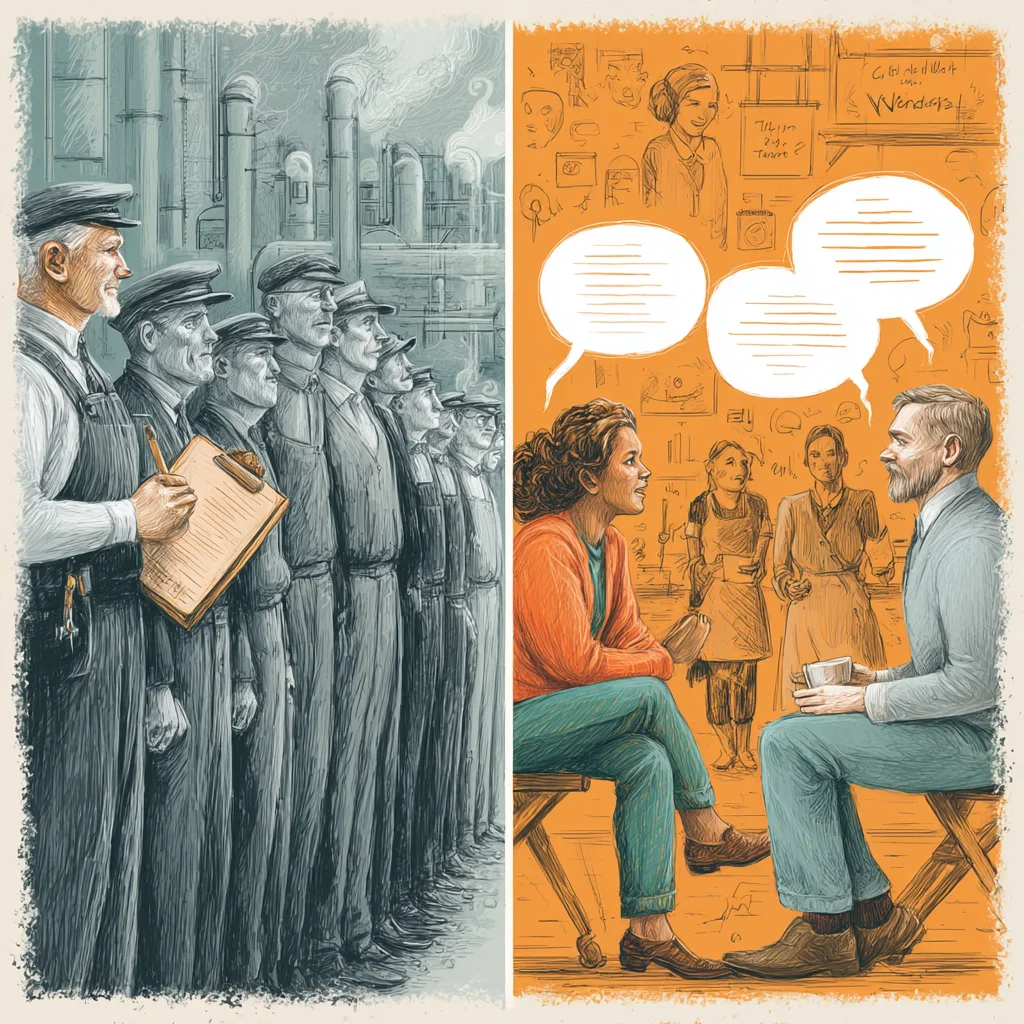
Writing better survey questions isn’t just a skill — it’s a mindset shift. You’re not designing a form; you’re starting a conversation. Every question tells employees: “We care what you think, and we’re ready to act on it.”
When questions are clear, relevant, and human, employees answer with honesty. When you combine that clarity with AI-driven insight, you get more than feedback — you get foresight.
Hoogly was built for this new era of listening. It helps HR teams go beyond static surveys, automatically surface the right questions, and turn raw feedback into actionable understanding.
The future of engagement isn’t just about asking employees what they think — it’s about creating a workplace that learns from what they feel.
If you’re ready to take your surveys from checkboxes to conversations, Hoogly can help you get there.
Start asking smarter questions — and get the answers that truly move your culture forward.