Spot psychosocial hazards early, and follow through with action
Hoogly helps employees share their experiences, seek guidance and raise concerns. Employers get de-identified hazard insights and secure case management for matters that need follow-up.
Try it as an employeeBe among the first organisations to access Hoogly Psychosocial Safety


See how a conversation goes
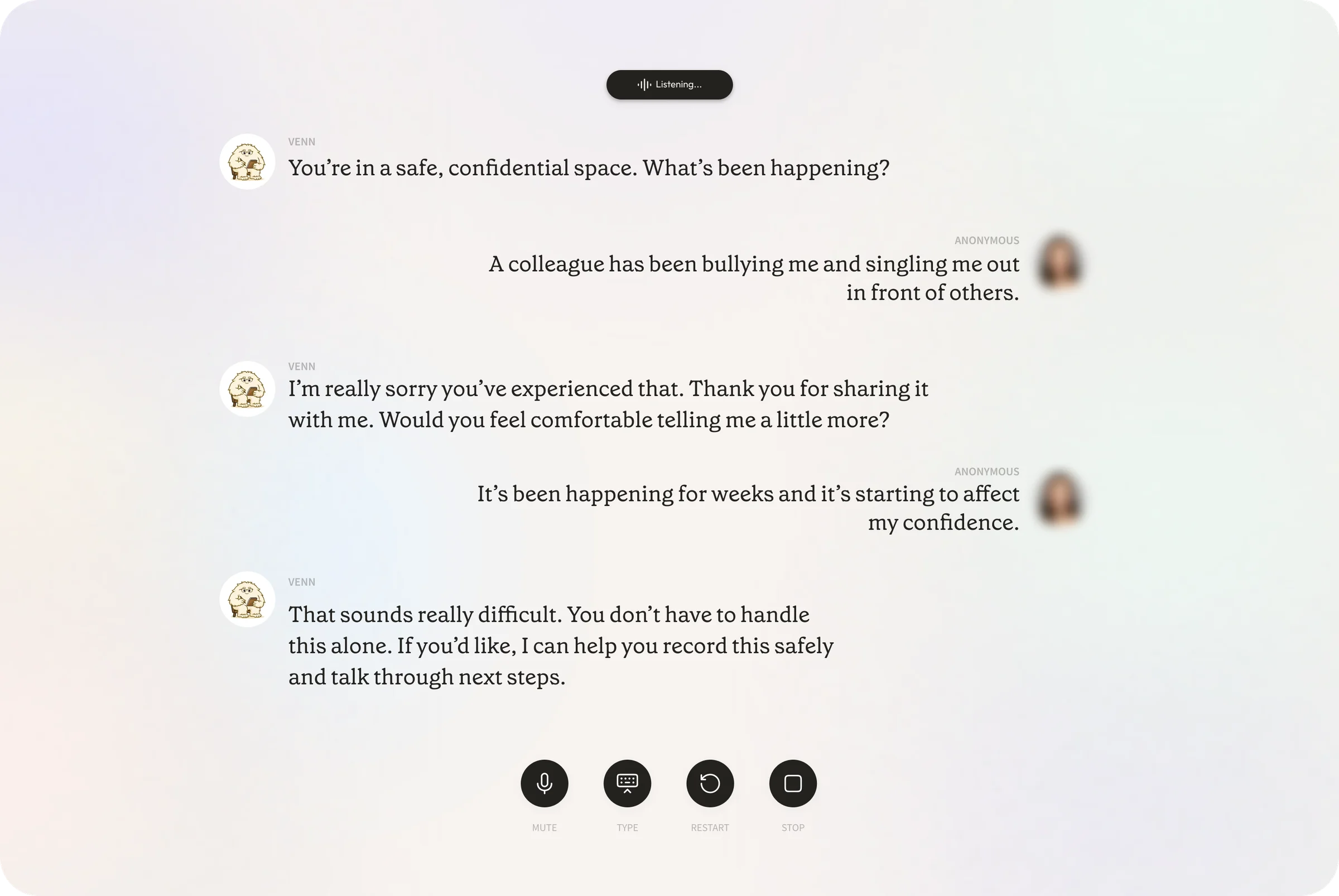
Venn asks, the person answers in their own words, and Venn follows up on what they said. This is an example, not a real response.
 VennConfidential conversation
The obligation isn't simply to ask employees how they feel

Psychosocial risks like chronic stress, harassment, and isolation develop between survey cycles
The obligation is to identify hazards, assess risk, and review whether controls are working

Employees don't report hazards through formal channels until the damage is done

Most psychosocial risk platforms rely on static questionnaires and disconnected spreadsheets
From early warning signs to meaningful action
Hoogly brings employee support, hazard identification, risk management and case response into one connected experience, designed to support recognised standards including ISO 45003, Safe Work Australia and Comcare.
One connected system for psychosocial safety
- CONFIDENTIAL EMPLOYEE SUPPORT
Give employees a safer way to share what they are experiencing
Venn uses confidential, two-way conversations to help employees explain workplace concerns in their own words. It can ask thoughtful follow-up questions, provide relevant guidance and help employees decide whether to continue privately, access support or raise a concern for individual follow-up.
- PSYCHOSOCIAL RISK MANAGEMENT
Identify, assess and manage workplace risks
Hoogly translates de-identified employee feedback into clear psychosocial hazard signals. Employers can understand where concerns are emerging, which workforce groups may be exposed and what workplace conditions may be contributing. Authorised leaders can review the evidence, assess the level of risk and record validated risks in the organisation's psychosocial risk register. The workflow supports best-practice risk management and controls.
- SECURE CASE MANAGEMENT
Manage sensitive concerns with clarity and care
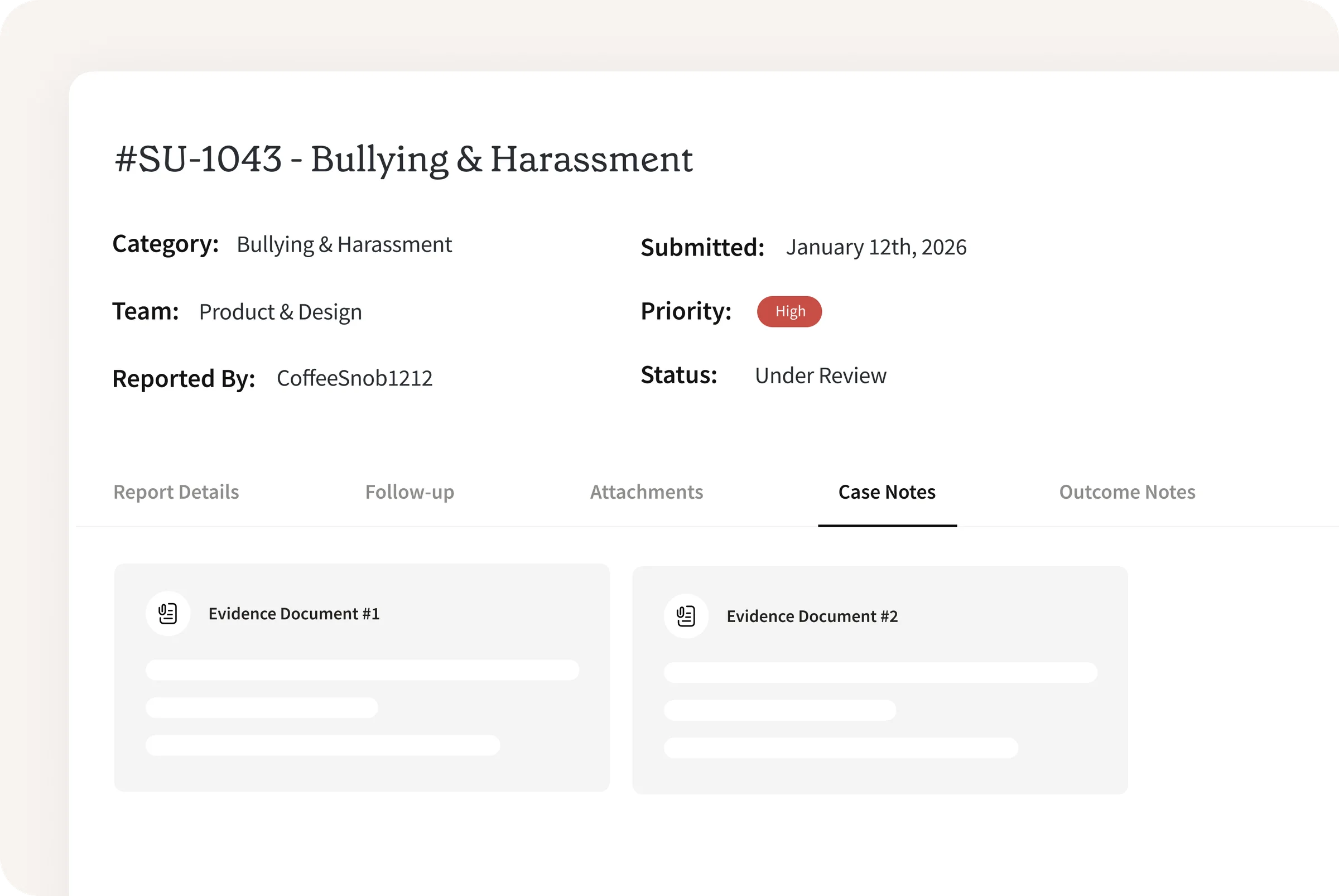
When an employee chooses to raise a concern, Hoogly creates a secure case workspace for authorised users. Teams can review the report, communicate with the employee, assess immediate risks, manage evidence, assign actions and maintain a clear record of the response from submission through to resolution.



Ready to build a safer workplace?
Contact us to learn how Hoogly helps you make work more human.
Get early accessHoogly integrates with 25+ HR systems
It syncs with your HRIS automatically, and delivers updates straight into the tools your team already uses — on their own terms, not a new system to check.
Your HRIS







Hoogly

 Login with Google and Microsoft SSO
We reach your team via
 Slack
 Microsoft Teams
 Google Chat
Security your IT department will love. Anonymity your employees can trust.
Hoogly is SOC 2 Type II certified, with continuous monitoring and independent audits keeping your data protected.
Why teams choose Hoogly for psychosocial hazard management
safe, judgment-free reporting
Employees share workplace concerns through natural conversations, not formal surveys. Venn asks follow-up questions to help them decide how to proceed.
coordinated case tracking and response
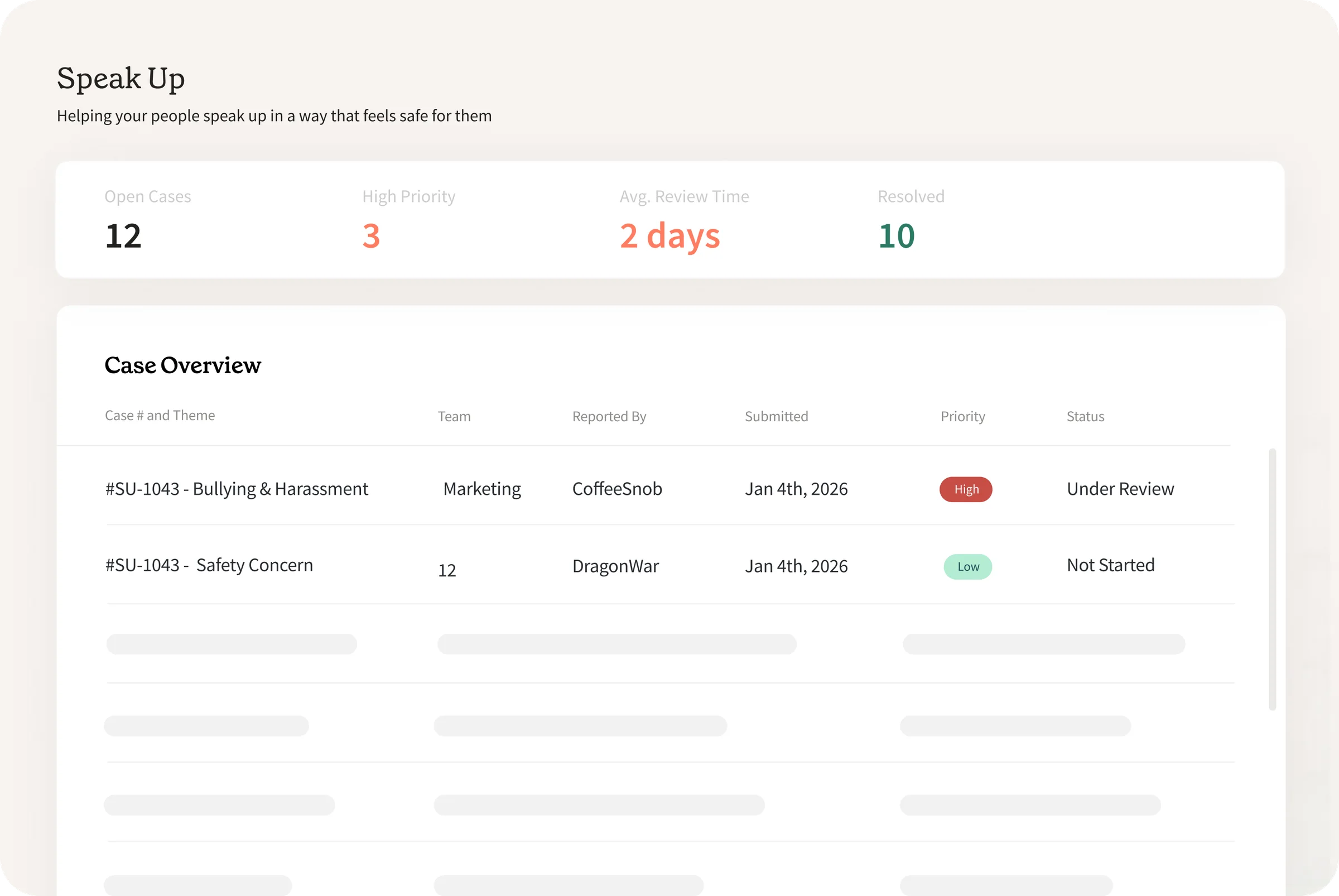
See all open cases at a glance with priority levels, review timelines and status. Case managers can coordinate response while keeping the reporter's identity protected.
evidence management and accountability
Attach documents, track follow-ups and record outcomes. Every case has a clear audit trail from submission to resolution.
Good questions.

What is a psychosocial hazard?
A psychosocial hazard is anything at work that can harm psychological health, things like chronic stress, harassment, bullying, isolation or unreasonable workload. These tend to build up gradually between formal check-ins rather than show up in a single moment, which is why they're easy to miss until real harm has already been done.
Is this just another survey about how employees are feeling?
No. The obligation isn't simply to ask employees how they feel: it's to identify hazards, assess risk, implement controls, and review whether those controls are working. Hoogly connects confidential employee support, hazard identification and secure case management in one system, not a survey exercise.
What does the risk management side actually do, versus just the employee conversation side?
Once de-identified feedback surfaces a hazard signal, authorised leaders can review the evidence, assess the level of risk, and record validated risks in the organisation's psychosocial risk register. That gives a structured path from signal to formal risk record, at a team or area level rather than pointing at any one person's comment.
What happens once an employee raises a specific concern rather than general feedback?
Hoogly creates a secure case workspace where authorised users review the report, communicate with the employee, assess immediate risk, manage evidence, assign actions and maintain a clear record from submission to resolution. This runs on the same secure case management system used in Hoogly's Speak Up tool, applied here to psychosocial concerns.
Does Hoogly align with ISO 45003?
Yes. Hoogly is designed to support the ISO 45003 framework for managing psychosocial risk at work. That reflects how the workflow itself is built; there's no formal certification, audit or legal sign-off behind it.
Does Hoogly align with Safe Work Australia guidance?
Yes. Hoogly is designed to support Safe Work Australia's guidance on managing psychosocial hazards. As with ISO 45003, this describes how the product is built, not a certified or audited compliance claim.
Who is legally responsible if a validated psychosocial risk isn't acted on?
The employer. Hoogly helps you identify hazards, assess risk and record them in your risk register, but it doesn't provide compliance alerting and doesn't take on the employer's legal obligation to act.
Help shape the next generation of psychosocial risk management
Hoogly helps organisations move beyond periodic assessment by connecting confidential employee support with structured risk management and secure case response.